Focused arrival windows
Useful updates and clear arrival timing.
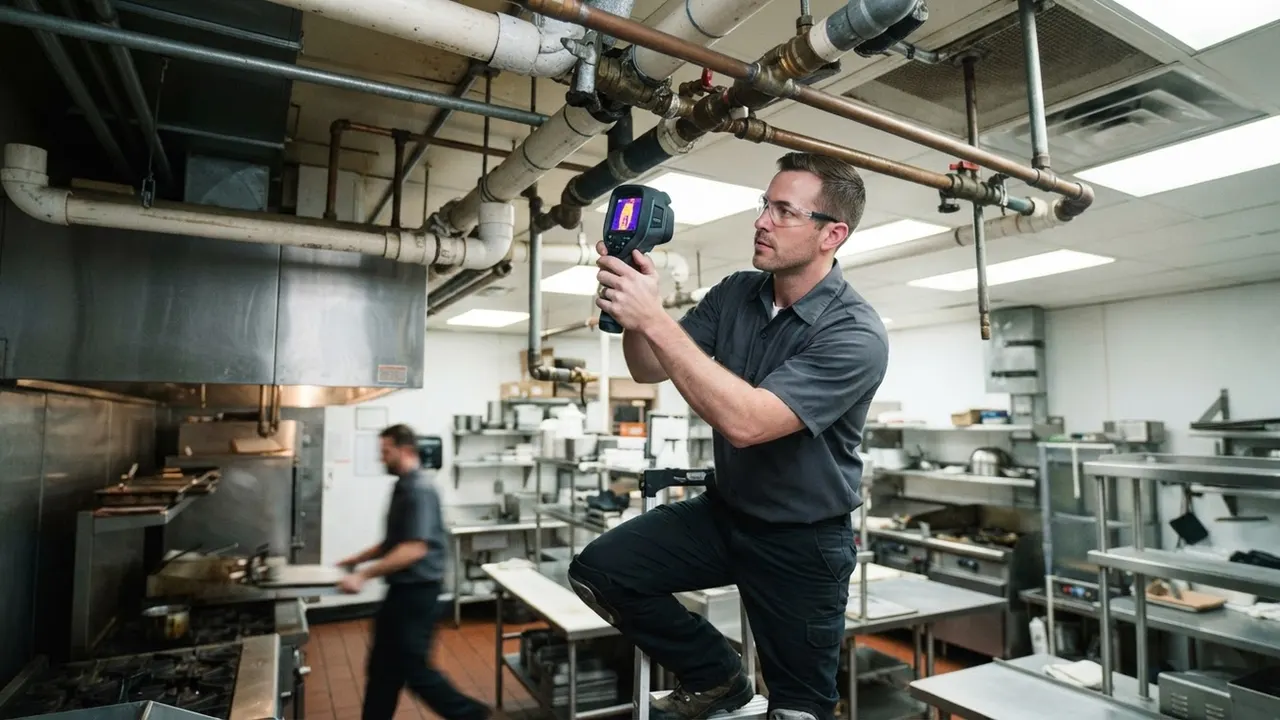
Slab Leak Detection & Repair in Greenville starts with finding the exact break, not jackhammering the whole floor. We use acoustic microphones and thermal imaging to trace the line under your slab, then repair it with code-correct materials. If your water bill jumped and the floor stays warm, call us before the soil shifts. We serve homeowners across Pitt County, NC, seven days a week.
Useful updates and clear arrival timing.
Review the approach and price before deciding.
Equipped vehicles and respectful cleanup.
Neighbors serving neighbors with follow-through.
Every slab leak call includes the full detection sequence and a written location report. Repair is quoted on site once we know the depth and material. Here is what is covered as standard and what we price separately so there are no surprises.
We shut down fixtures, irrigation, and the water heater, then watch the pressure testing gauge for 20 to 30 minutes. This confirms whether the loss is under the slab or somewhere above it. It is the step that prevents us from opening a floor for nothing.
We combine an acoustic leak detection microphone with a thermal imaging camera and a pipe locator to trace the line and mark the break. You get the location marked on the floor and a written report with depth and material notes.
The failed section is cut out and rebuilt with PEX piping or copper pipe, new pipe fittings, and proper sealant. Every joint is built to NC plumbing code and wrapped for soil contact. We do not patch with epoxy pipe repair on pressurized lines.
After repair we re-pressurize the line and hold it under test for 30 minutes. You receive a written record of the test, which is useful for insurance claims and for resale. A repair without a documented test is an unfinished repair.
We backfill the access point, patch the concrete, and clean the work area before we leave. Most patches are 18 inches square or smaller. We also check nearby flooring for moisture damage and tell you what to watch over the next week.
Share what is happening and receive a clear next step from the local team.
Slab Leak Detection & Repair in Greenville is the process of locating a pressurized water line break beneath a concrete foundation and repairing it without unnecessary demolition. We pressurize the system, listen for the hiss with an acoustic leak detection microphone, and confirm the hot spot with a thermal imaging camera. Once we know the depth and direction, we open a small access point, cut out the failed section, and rebuild it in PEX piping or copper pipe. Then we pressure-test the line and restore the slab.
Greenville's clay-heavy soil and older post-war slab homes push water lines through constant expansion and contraction, which is why under slab leak detection Greenville calls spike after every hard freeze. A pinhole in copper pipe can waste 30 to 60 gallons a day before you ever see a wet spot. We also check the pressure testing gauge for whole-house spikes that point to a foundation water leak repair near me situation rather than a fixture drip.
We ask about your water bill, warm floor spots, and meter behavior while you are still on the phone. That five-minute conversation tells us whether you likely have a slab leak, an irrigation line leak, or a running toilet. We schedule a same-day or next-morning visit and give you an arrival window.
On site, we shut off fixtures and irrigation, then watch the pressure testing gauge. If the system loses pressure with everything closed, the leak is underground. This step takes 20 to 30 minutes and separates a true slab leak from a dripping faucet or a leaking water heater.
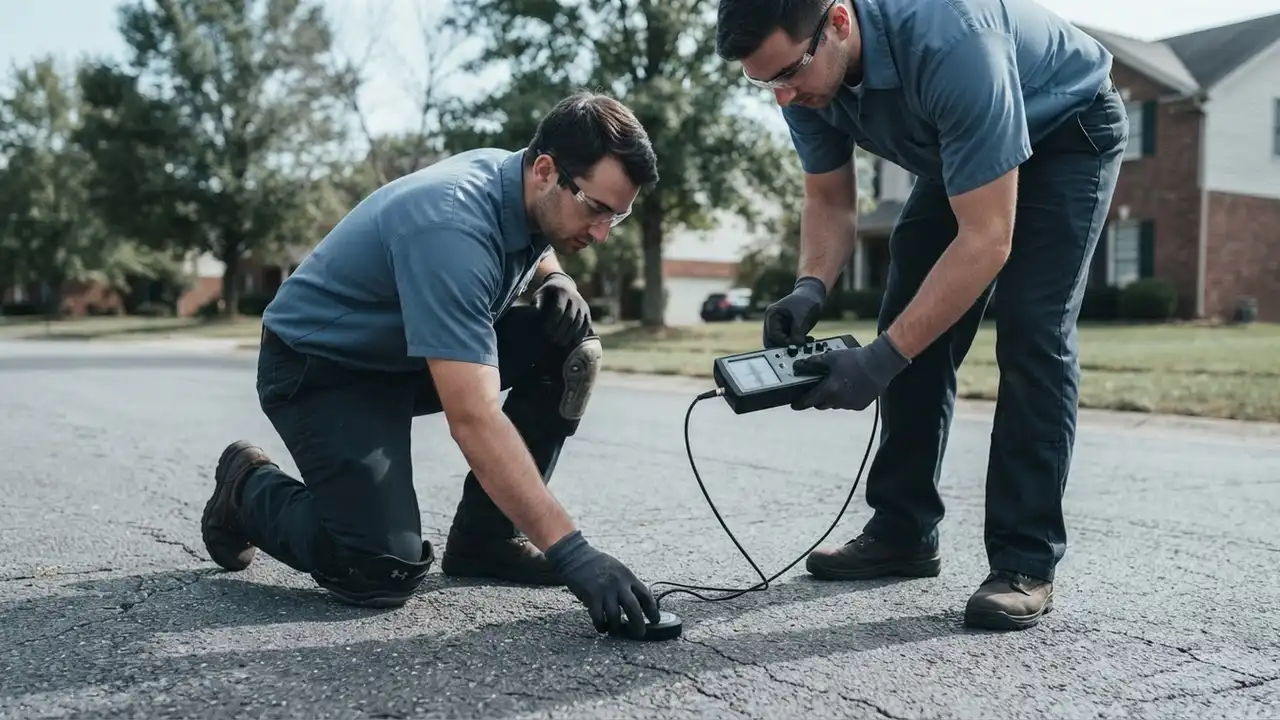
We walk the slab with an acoustic leak detection microphone and a pipe locator to trace the line. A thermal imaging camera confirms the hot or cold signature. Most residential slabs are pinpointed within 45 to 90 minutes, and we mark the access point with tape before any cutting starts.
We open a small access point, cut out the failed section, and rebuild it with PEX piping or copper pipe and new pipe fittings. The joint is sealed with pipe sealant and Teflon tape, then wrapped for soil contact. Repair typically runs two to four hours depending on depth and how much concrete we open.
We re-pressurize the line, hold it under test for 30 minutes, and check every fixture for air. Once it holds, we backfill, patch the slab, and clean the work area. You get a written summary of what failed, where it was, and what to watch for next winter.
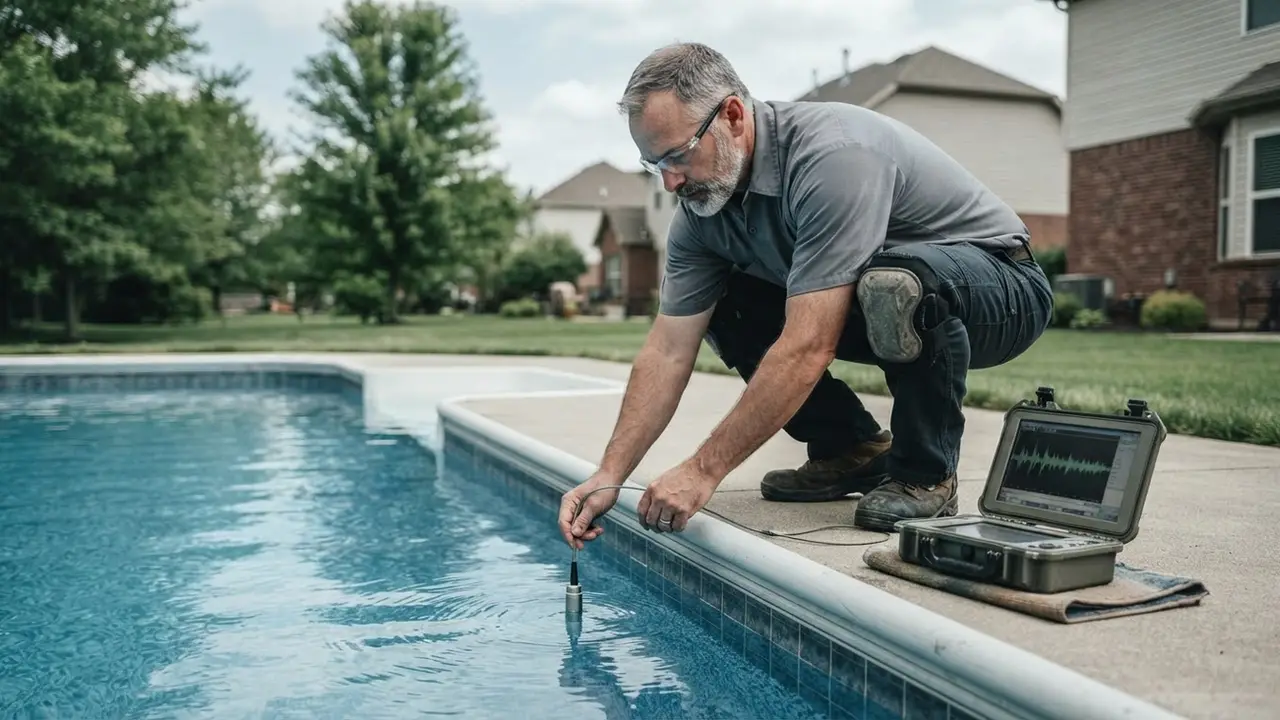
Listens for the specific frequency of pressurized water escaping a pipe under concrete. It lets us mark the break within inches before we cut.
Shows temperature differences on the slab surface. A hot-water leak reads as a warm streak that traces the line path and confirms the acoustic finding.
Traces the buried line path so we know exactly where the pipe runs under the slab, which keeps the access cut small and accurate.
Confirms whether the system loses pressure with all fixtures closed. This single test separates a slab leak from a fixture drip in about 20 minutes.
Reads moisture content in drywall, baseboards, and carpet pad near the slab edge. Anything above 20 percent tells us water has traveled from the break.
Used on low-pressure or hard-to-hear lines where acoustic gear struggles. A safe gas mixture is pushed into the line and traced at the surface.
Confirms pipe material and condition inside the line. It shows whether the failure is a pinhole, a joint, or a full section that needs replacement.
We close every fixture, irrigation zone, and the water heater, then watch the gauge. A pressure drop with everything closed confirms an underground loss. This method rules out the cheap causes first and keeps you from paying for a slab repair you do not need.
We do not trust one tool alone. The acoustic microphone finds the sound, the thermal camera confirms the heat signature, and the pipe locator maps the path. When all three agree, we cut. That correlation is why our access points stay small.
We cut out the failed section and rebuild it with PEX piping or copper pipe, new pipe fittings, and proper sealant. Joints are wrapped for soil contact and built to NC plumbing code. We do not use epoxy pipe repair on pressurized lines.
After the repair we re-pressurize and hold the line under test for 30 minutes. If it holds, we backfill and patch. If it does not, we keep working. No repair is finished until the gauge says so.
We isolate the hot-water side, pinpoint the copper pipe break under the kitchen with acoustic and thermal gear, and open one 18-inch access point. The failed section is replaced with PEX piping and pressure-tested. Repair completed in three hours. The next water bill returned to its normal range, and the tile was re-set over the patch the following week.
A moisture meter reads 24 percent at the baseboard. We pressure-test the system, locate a cold-water slab leak, and repair it between tenant shifts to avoid displacing anyone. The leak was fixed in one afternoon, the carpet pad was replaced, and the musty odor cleared within a week. The owner received the pressure-test documentation for insurance.
We answer the emergency line, walk them through shutting the main valve, and roll a truck. The ultrasonic leak detector traces the sound to a cracked fitting under the garage slab. Emergency isolation stopped the water loss that night, and the permanent repair was completed the next morning. No flooring was lost.
We rule out the toilet and irrigation first, then pinpoint a hot-water slab leak under the bathroom vanity. The repair is made through a small access cut in the adjacent closet. The line held pressure on the first test, the bill dropped back to normal, and the closet patch was painted to match within two days.
Greenville sits on expansive clay soil that swells when wet and shrinks when dry, and that cycle is hard on under-slab water lines. Our January freezes push pipes to the breaking point, and the calls come in fast once the thaw starts. Older slab homes near downtown and around the ECU campus often still have original copper pipe, which develops pinholes after 40 to 50 years. Newer builds in the 27858 and 28590 ZIP codes use PEX piping, but fittings and manifolds still fail. We follow NC plumbing code on every repair and pressure-test before backfill. If you are searching for under slab water leak repair Greenville NC, we handle the detection, the repair, and the slab patch without subcontracting any of it. Pitt County homes on crawlspaces get a different approach, and we check that first so you are not paying for slab work you do not need.
A high concentration of 1950s and 1960s slab homes with original copper lines. Pinhole leaks are common, and rental turnover means leaks often go unnoticed for months.
Mid-century ranches on shallow slabs. We often pinpoint breaks within a few feet of the kitchen or hall bath, where the original line layout concentrates fittings.
A mix of older slab homes and newer subdivisions. Newer PEX manifolds sometimes fail at the crimp ring, which reads as a slab leak on the meter.
Soil here stays wetter longer after rain, so foundation movement and pipe stress show up sooner. We check soil moisture around the slab edge as part of the inspection.
Wet-dry cycles move the slab and stress buried lines. This is the leading cause of pinhole leaks in copper pipe under Greenville homes, and it is why we wrap every repaired joint for soil contact.
Pipes in exterior walls and under unheated slabs freeze, then burst as they thaw. We see a spike in emergency calls the week after a hard freeze, usually for burst pipe repair and slab leaks together.
Copper that has been in the ground 40 to 50 years develops pinholes from soil corrosion. When we open a line, we inspect the surrounding section and tell you if more failures are likely.
A high water table can mask a slab leak because the ground is already wet. We rely on pressure testing and acoustic gear rather than visible wet spots to confirm the break.
A homeowner in the 27858 ZIP code saw the water bill jump from $65 to $190 in one month. The kitchen floor was warm near the sink, and the water heater ran constantly. Two other plumbers had suggested replacing the whole floor.
We isolated the hot-water side, pinpointed the break under the kitchen with acoustic and thermal gear, and opened one 18-inch access point. The copper section was replaced with PEX piping and pressure-tested for 30 minutes. The next bill came in at $71.
Maintenance: We recommended checking the water meter monthly with all fixtures off. A slow spin means a new leak is starting, and catching it early keeps the access cut small.
A rental near ECU had a musty hallway and a soft spot in the carpet. The tenant had mentioned it for weeks. A moisture meter read 24 percent at the baseboard, and the water bill was up $90.
We pressure-tested the system, located a cold-water slab leak under the hallway, and repaired it in one afternoon between tenant shifts. The carpet pad was replaced, and the moisture reading dropped to 11 percent within four days.
Maintenance: We told the owner to re-check the baseboard with a moisture meter after the next rainy season. If it climbs again, the soil around the slab edge may need regrading.
A homeowner in the 27834 ZIP code heard running water at 2 a.m. with every fixture off. The main valve was open, and the sound was loudest near the garage. They called our emergency line.
We walked them through shutting the main valve, then rolled a truck. The ultrasonic leak detector traced the sound to a cracked fitting under the garage slab. Emergency isolation stopped the loss that night, and the permanent repair was done the next morning.
Maintenance: We suggested insulating the garage wall lines before the next freeze and checking the pressure gauge seasonally. A 30-minute pressure hold at the start of winter catches small failures early.
Most slab leak calls start with one of these four symptoms. Each one has a different fix, and guessing wrong costs money. Here is how we sort them out and what we do about each.
You are paying for water that is soaking into the soil under your foundation. Left alone, that water softens Pitt County clay and causes the slab to move, which cracks tile and drywall. We isolate the system with the pressure testing gauge, rule out the toilet and irrigation, then pinpoint the under-slab break with acoustic gear. Most high-bill slab leaks are repaired the same day we find them.
A hot-water slab leak heats the concrete from below and can warp laminate or lift tile within weeks. It also keeps the water heater running constantly, shortening its life. A thermal imaging camera confirms the hot line path, and the acoustic mic marks the break. We cut one small access point, replace the failed copper section with PEX piping, and pressure-test before backfill.
That hiss is pressurized water escaping a pinhole or cracked fitting. It can waste 30 to 60 gallons a day and eventually undermine the slab or flood a nearby room. We use an ultrasonic leak detector and pipe locator to trace the sound to its source. Once located, we repair the section and verify with a 30-minute pressure hold. No more hiss, no more waste.
Foundation movement from saturated soil shows up as cracks, uneven floors, and doors that no longer latch. Treating the crack without fixing the water source wastes money. We find and repair the foundation water leak first, then let the soil dry and stabilize. If structural repair is still needed after the pipe is fixed, we tell you honestly and refer a foundation specialist.
Most slab leak detection jobs in Greenville run $250 to $450 in 2026, including pressure isolation, acoustic pinpointing, and a written location report. Repair is quoted separately, usually $600 to $2,500 depending on depth, pipe material, and how much concrete we open. We give you both numbers before any cutting starts.
The four most common signs are a water bill that jumps 20 percent or more with no change in habits, a warm spot on the floor over a hot-water line, the sound of running water when every fixture is off, and cracks appearing in tile or drywall corners. A moisture meter reading above 20 percent near a baseboard confirms it.
Sometimes, yes. If the line is accessible from a crawlspace, garage wall, or exterior stub, we can reroute or sleeve the pipe without touching the slab. For a true under-slab break, we open one small access point, usually 18 inches square, rather than tunneling the whole line. We tell you which route fits your home before work begins.
A licensed plumbing contractor with leak detection equipment fixes foundation leaks, not a foundation company. The crack in your drywall is usually a symptom, not the problem. We locate the water source first, repair the pipe, then confirm the soil has stopped moving. If structural repair is still needed, we tell you straight.
Not seeing your question? Our local team can help you understand urgency, scheduling and what to expect.
Ask the local team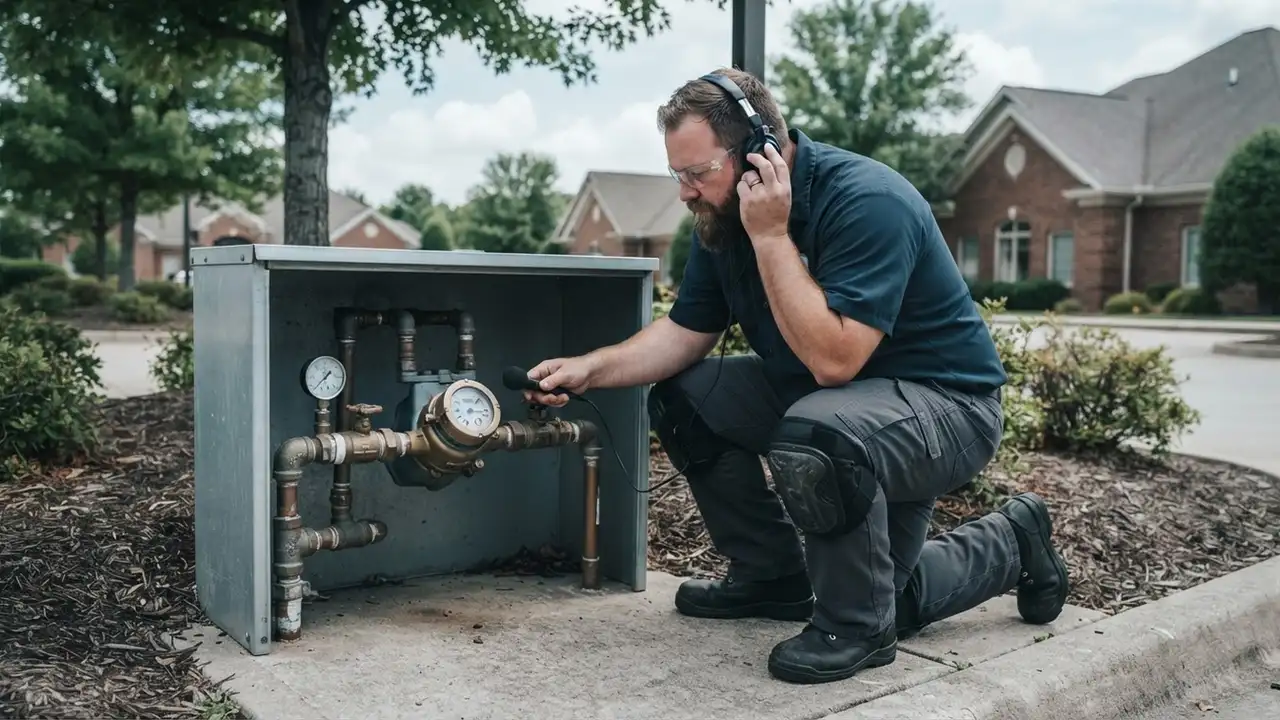
The main water service line from the meter to your home runs under the yard and often under the slab edge. When we isolate a slab leak, we also pressure-test the service line, because a break there produces the same high water bill and wet soil.
View serviceA slab leak is one of the top three causes of a sudden high water bill in Greenville. We start with meter isolation, then narrow down between the toilet, irrigation, water heater, and under-slab line. You get a clear answer, not a list of guesses.
View service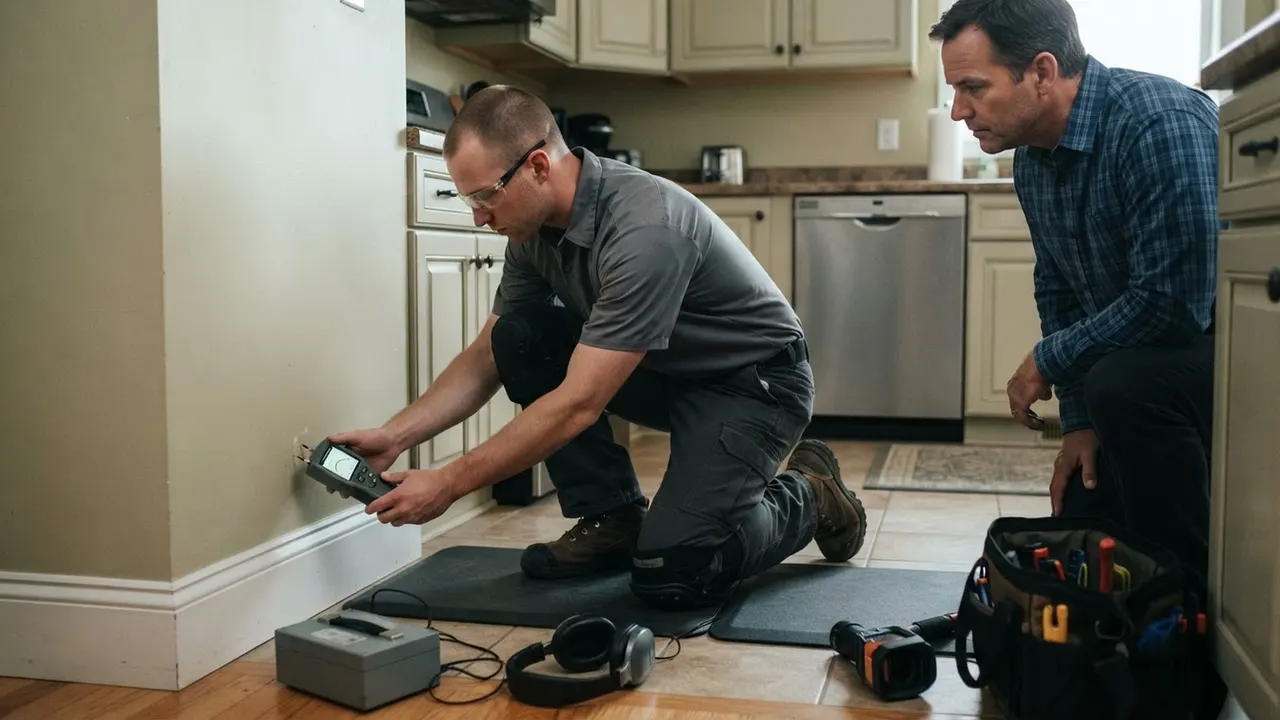
Restaurants, laundromats, and office buildings on slab foundations lose water through the same pipe failures as homes, but the stakes are higher. We work after hours to avoid shutting down your business, and we document every test for your property records.
View service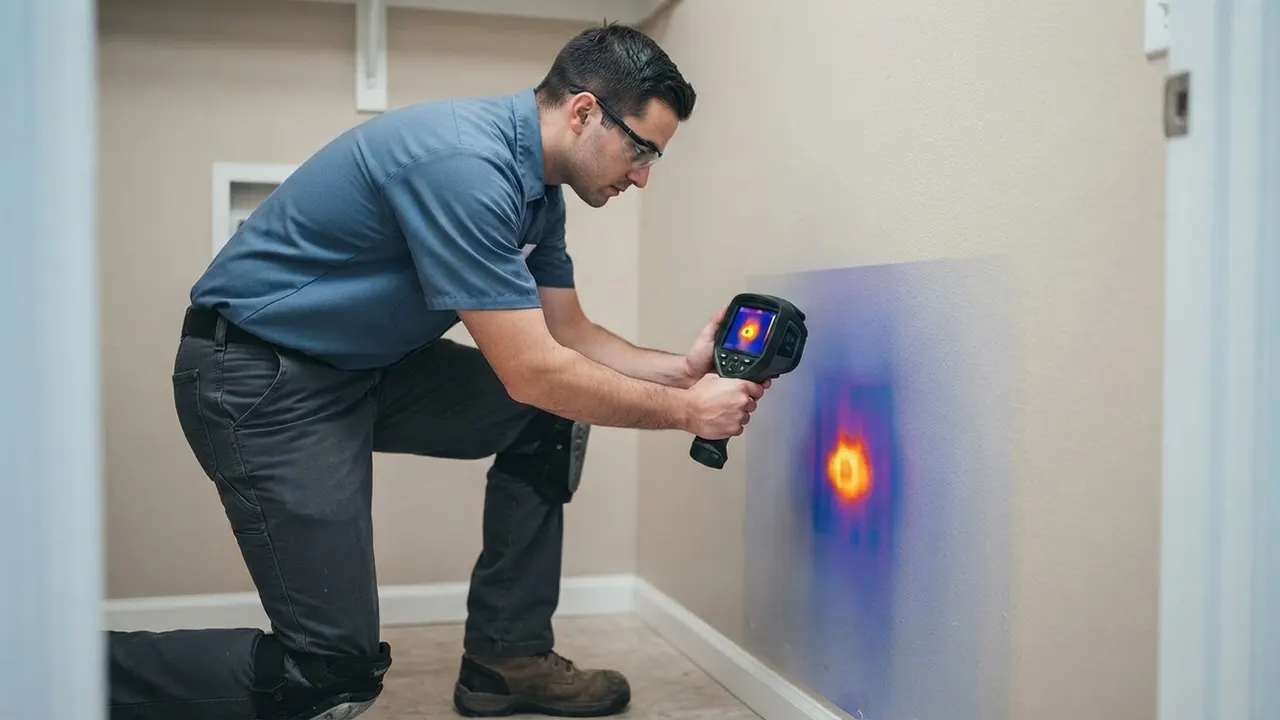
A ceiling water stain often means the leak started higher up and traveled along a joist. We trace it back with thermal imaging and moisture meters. If the source turns out to be a slab line pushing water up through the wall plate, we handle that too.
View service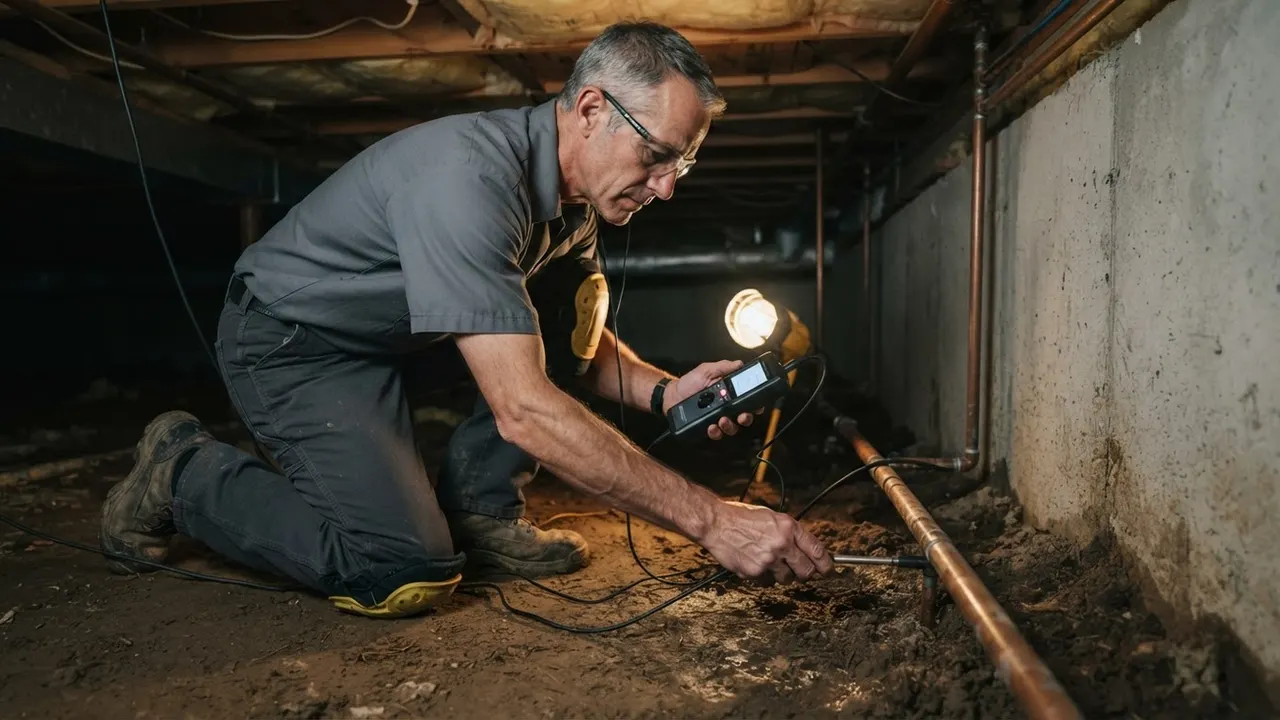
Call +923139383014 and tell us what you are seeing. Our office is open 8 a.m. to 6 p.m. Monday through Friday, and our emergency line runs 24/7 for burst pipes and active flooding. Most Greenville calls get a technician within 60 to 90 minutes. You can also email [email protected] with photos of the leak.