How to Prevent Frozen and Burst Pipes in Greenville Winters
Greenville NC winters can freeze and burst your pipes. Learn prevention steps, warning signs, and when to call a leak detection pro before damage hits.
You prevent frozen pipes in Greenville NC by keeping every exposed pipe above 32°F - insulate, seal drafts, drip faucets, and disconnect outdoor hoses before the first hard freeze. Greenville winters regularly drop into the low 20s and teens, and that is cold enough to freeze the pipes running through your crawlspace, attic, or along an exterior wall. This guide walks you through the exact prevention steps we use on service calls across Pitt County, plus what to do when a pipe does freeze and how to spot the damage before it floods your floor.
Why Greenville Winters Put Your Pipes at Risk
Greenville sits in the coastal plain of North Carolina, which means our winters are short but sharp - a 70°F afternoon can turn into a 19°F night by the weekend. That swing is harder on plumbing than a steady cold climate because pipes never fully acclimate. When the temperature drops fast, the water inside your pipes does not have time to drain or warm back up, and ice expands with roughly 9% more volume than liquid water.
Most homes here are built on crawlspaces or slabs. Crawlspace pipes sit in unconditioned air that tracks within a few degrees of the outdoor temperature. A 25°F night in Greenville can push a poorly insulated crawlspace line down to 28°F, and that is freeze territory. We see the same pattern in older homes near East Carolina University and in the neighborhoods around Elm Street and Evans Street, where original galvanized or copper lines were never updated for modern insulation standards.
If you have ever dealt with a high water bill leak detection Greenville NC call after a cold snap, you already know how expensive a hidden freeze crack can get. A pinhole split in a copper line can dump hundreds of gallons into a crawlspace before you notice the meter spinning.
How to Prevent Frozen Pipes Greenville NC Homeowners Face
Prevent frozen pipes Greenville NC is a checklist, not a single fix. The homeowners who avoid winter damage every year do the same six things before the first freeze warning hits the local news.
- Insulate every exposed pipe. Foam pipe sleeves cost about $2 to $4 per six-foot section at any Greenville hardware store. Wrap crawlspace lines, attic runs, and any pipe within 12 inches of an exterior wall.
- Seal air leaks around penetrations. Use expanding foam or caulk where pipes enter the foundation, siding, or crawlspace rim joist. A half-inch gap can funnel 20°F air straight onto a supply line.
- Disconnect and drain outdoor hoses. A hose left connected traps water in the sillcock. That water freezes, splits the valve body, and you find out in March when you turn the spigot on.
- Close crawlspace vents. Most Greenville crawlspaces have foundation vents that stay open year-round. Close them in November and reopen in March. If your vents are automatic, verify they are actually closing.
- Keep cabinet doors open under sinks. On exterior-wall kitchens and bathrooms, open the cabinet doors during hard freezes so warm indoor air reaches the pipes.
- Set the thermostat no lower than 55°F. Even if you leave for the holidays, keep the heat on. A 55°F house keeps interior pipe zones well above freezing.
We handle a lot of crawlspace leak detection Greenville NC work in January and February, and nine times out of ten the failure traces back to a skipped step on that list. Insulation is cheap. Crawlspace drying and pipe replacement are not.
What Temperature Do Pipes Freeze in Greenville North Carolina?
Water pipes begin to freeze at 32°F, but the air temperature has to stay at or below that mark for roughly 4 to 6 hours before ice forms inside a typical residential line. In Greenville, that usually means an overnight low of 28°F or colder. The wind chill matters too - a 30°F night with 15 mph wind pulls heat out of exposed pipes much faster than still air at the same temperature.
Exposed pipes in a crawlspace, attic, or garage freeze first because they have no indoor heat buffer. Pipes buried underground or running through interior walls rarely freeze unless the heat is off for days. That is why we tell customers to worry less about the buried water main and more about the 12 feet of copper running along the north wall of the garage.
Once ice forms, pressure builds between the ice plug and the closed faucet. That pressure is what actually bursts the pipe - not the ice itself. A split can happen at 2 a.m. and not leak until the thaw, which is why a burst pipe repair Greenville NC call often comes in right as temperatures climb back above freezing.
Should You Drip Faucets to Prevent Frozen Pipes in Greenville?
Yes - dripping faucets is one of the most effective things you can do when Greenville temperatures drop below 25°F. A slow drip relieves pressure inside the line and keeps water moving, which makes it much harder for ice to form a solid plug. You do not need a full stream. A drip every one to two seconds is enough.
Drip the faucet farthest from where the water enters your home, and if you have pipes on an exterior wall, drip both the hot and cold sides. The small cost of extra water - roughly 2 to 3 gallons over an eight-hour night - is nothing compared to a burst pipe repair that runs $500 to $1,500 in 2026 pricing for a typical Greenville home, before you factor in drywall or flooring.
If you are on a well, dripping still helps, but you also want to make sure the pressure tank and any above-ground well lines are insulated. We see well-line freezes in the rural stretches out toward Ayden NC leak detection territory every January.
Winter Pipe Protection Greenville North Carolina: Outdoor and Crawlspace Lines
Winter pipe protection Greenville North Carolina starts with the pipes you cannot see. Crawlspace lines, irrigation mains, pool plumbing, and hose bibs are the first to freeze because they sit outside your home's thermal envelope.
Irrigation and Sprinkler Lines
Blow out your irrigation system before the first freeze. Trapped water in a sprinkler zone or backflow assembly will crack the PVC or the brass valve. If you skipped the blowout and your system is already frozen, we handle irrigation leak detection Greenville NC calls all winter and can locate the split without digging up the whole yard.
Pool and Spa Plumbing
If you keep your pool open through winter, run the pump during freezing nights and keep water moving through the lines. If you close it, drain the above-ground plumbing completely. A frozen pool line can crack a fitting underground, and you will not see the leak until spring startup.
Crawlspace Pipes
Insulate every supply and drain line in the crawlspace, and close the foundation vents. If your crawlspace has a dirt floor, lay a vapor barrier - it keeps ground moisture from condensing on cold pipes and forming frost. We see this constantly in older homes around Winterville NC leak detection service area, where crawlspaces were never updated after the original build.
Common Mistakes That Lead to Burst Pipes in Greenville
Most winter pipe failures we see in Greenville trace back to a handful of avoidable mistakes. Watch for these:
- Leaving the hose connected. The single most common cause of a split sillcock. Disconnect it in November.
- Turning the heat off when you travel. A 40°F house during a 20°F week is a burst pipe waiting to happen. Keep it at 55°F minimum.
- Insulating only the pipe, not the gap. Foam sleeves do nothing if cold air still blows through an open foundation vent or an unsealed rim joist.
- Ignoring a slow drain or weak water pressure. A partially frozen line often shows up as reduced flow before it bursts. If one faucet runs slow on a cold morning, that is your warning.
- Waiting for the thaw to check for leaks. Walk your crawlspace and check under sinks the morning after any hard freeze. Catching a split early saves thousands.
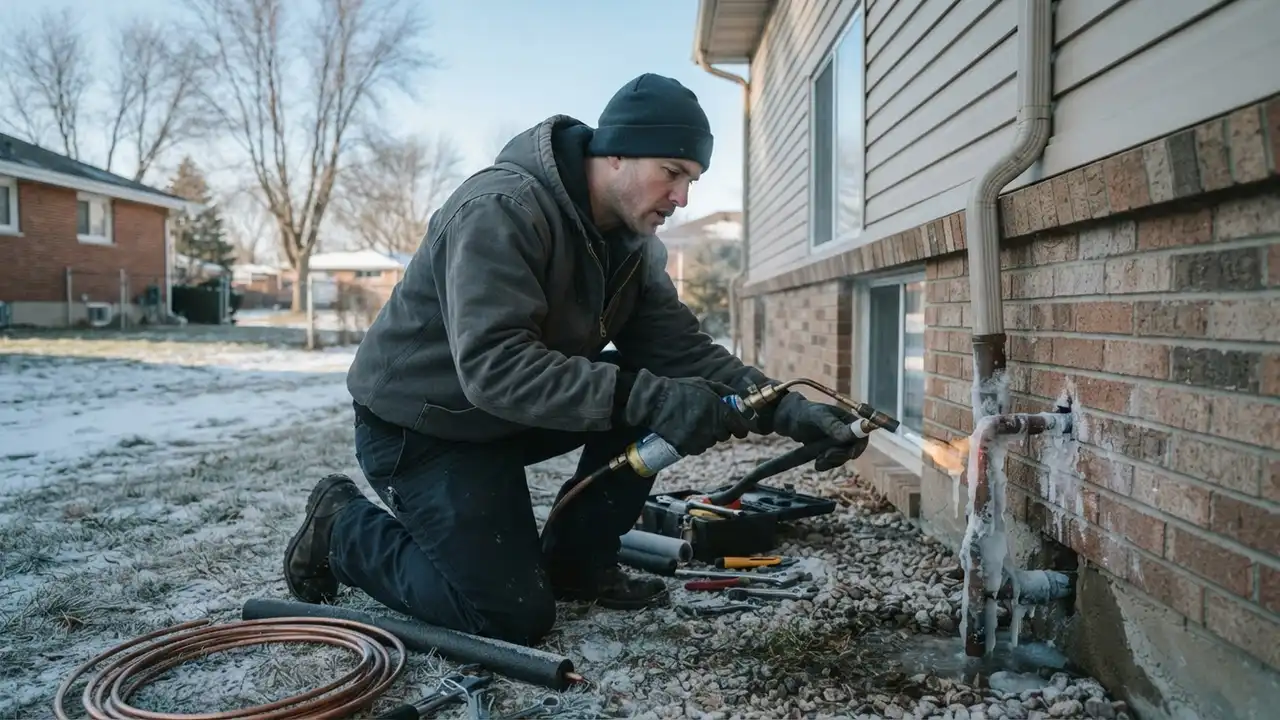
One more: do not pour boiling water on a frozen pipe or use an open torch. Use a hair dryer, heat lamp, or wrapped towels with warm water, and work from the faucet end back toward the freeze.
When to Call a Professional
Call a professional when you cannot find the freeze point, when a pipe has already split, or when you see water where it should not be. If your water meter is spinning with every fixture off, you have a leak - and a frozen line that cracked underground will not show itself until it has already saturated the soil.
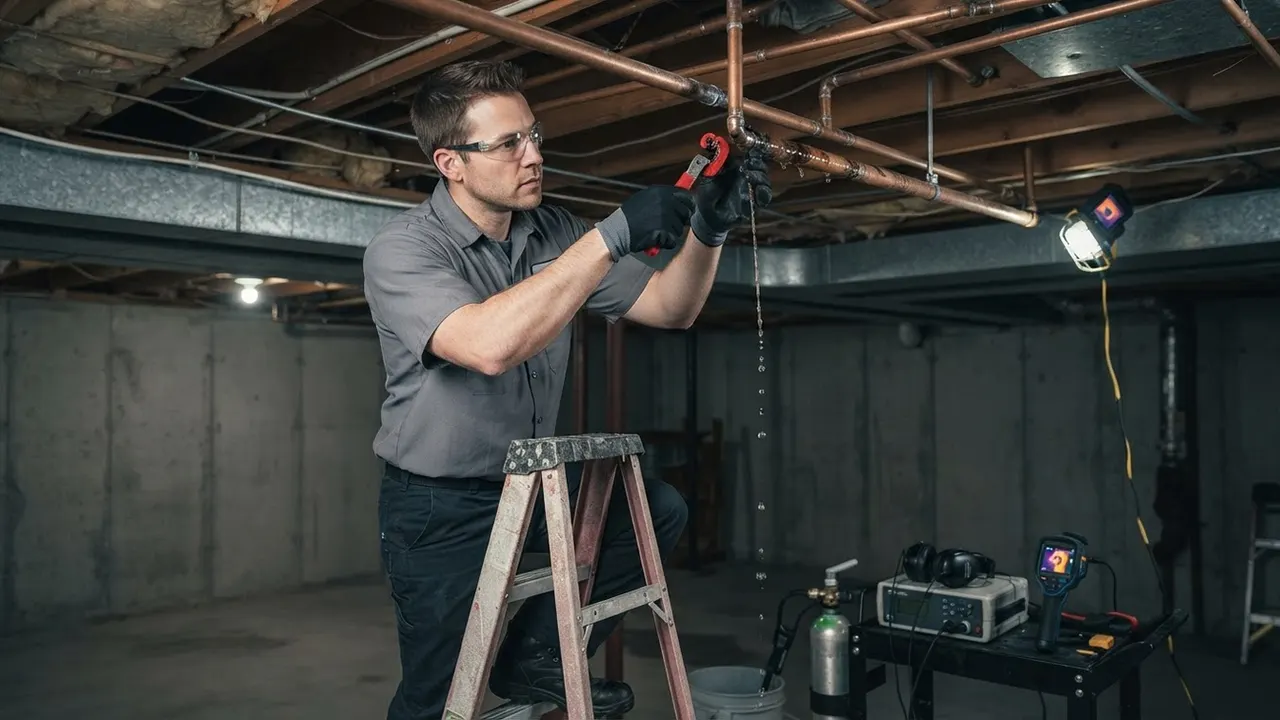
At Greenville Leak Detection Pros, we use acoustic listening equipment, thermal imaging, and pressure testing to find freeze damage without tearing up your floors or yard. We handle everything from a single water line leak detection Greenville NC job to full commercial building inspections. If you are not sure whether you have a problem, call us and we will tell you straight.
Frequently Asked Questions
How do I prevent pipes from freezing in Greenville NC?
Insulate exposed pipes, seal air gaps around penetrations, disconnect hoses, close crawlspace vents, and drip faucets when lows drop below 25°F. Keep your thermostat at 55°F or higher even when you travel. Those six steps prevent the vast majority of freeze damage we see in Pitt County.
What temperature do pipes freeze in Greenville North Carolina?
Pipes begin freezing at 32°F, but it usually takes 4 to 6 hours at or below that temperature. In Greenville, an overnight low of 28°F or colder is enough to freeze an exposed crawlspace or exterior-wall line. Wind makes it happen faster.
Should I drip faucets to prevent frozen pipes in Greenville?
Yes. A drip every one to two seconds relieves pressure and keeps water moving. Drip the faucet farthest from your water entry point, and drip both hot and cold on exterior-wall sinks. The extra water cost is a few cents versus hundreds for a repair.
Who repairs frozen burst pipes in Greenville NC?
Greenville Leak Detection Pros repairs frozen and burst pipes across Greenville and Pitt County. We locate the split with acoustic and thermal tools, repair or replace the damaged section, and pressure-test the line before we leave. Call us at +923139383014.
How much does burst pipe repair cost in Greenville?
Typical 2026 pricing for a burst pipe repair in Greenville runs $500 to $1,500 depending on access and pipe material. Crawlspace and slab repairs sit at the higher end. Water damage restoration, if needed, is separate and can add several thousand dollars.
Get Help with Leak Detection in Greenville
If you suspect a frozen or burst pipe, do not wait for the thaw. Our team finds the leak, fixes it, and tests the line before we leave - usually the same day you call.
Call Greenville Leak Detection Pros at +923139383014 for fast, local help across Greenville and Pitt County.